
In the wake of the natural disaster in Uttarakhand, the proposal for 'catastrophe insurance' is in spotlight.

'Now they're talking about changing the Constitution; they feel they have no reason now to hide their intentions.'

In Uttar Pradesh, two persons were killed since Tuesday in the floods which have affected around 8.7 lakh people in 987 villages of 28 districts in the state.

The water level rose above the danger mark in Haridwar and Delhi and the level at Bhakra dam was a foot above the permissible mark.

The families of workers missing from the Rishiganga hydel project site created a ruckus in Raini on Wednesday accusing the authorities of not carrying out the rescue operations properly after the sudden flood in the Alaknanda river system wreaked havoc.

A 13.2 MW small hydro project on the Rishiganga river was swept away in the glacier burst in Uttarakhand on Sunday, but there is no danger of floods in the downstream areas as the water level has been contained.

The Centre has asked states and union territories witnessing surge in new COVID-19 cases and high active caseload to continue with the strategy of 'test, track and treat' that had yielded rich dividends at the height of the pandemic and accelerate vaccination for priority population groups in districts reporting higher infections on mission mode.
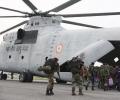
After a brief suspension due to bad weather early in the morning, the rescue operations in rain-hit Uttarakhand resumed on Sunday on a war footing to evacuate 22,000 pilgrims still stranded in high altitude areas amid a MeT department warning of light to moderate rains in the region from Monday.

Mihir Bhatt, founder of the All India Disaster Mitigation Institute, a community-based, action research and advocacy organisation engaged in disaster risk management, tells Vicky Nanjappa that India needs to start learning from its flood experiences and innovating for future responses.
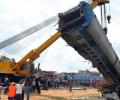
Investigators were on Sunday looking into what caused one of the deadliest train accidents in recent times as rescue operations continued

In an order, Union Home Secretary Ajay Bhalla said buses shall be used for transport of such groups of stranded people and these vehicles will be sanitised and will have to follow safe social distancing norms in seating.

This is also the base of the ITBP's Battalion No. 1, tasked with guarding the Line of Actual Control with China that runs along the state.
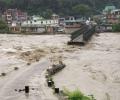
All educational institutions in Shimla and Kullu districts will remain closed on Monday as heavy to extremely heavy rains continue to lash the state, district officials said.
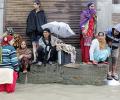
'Modi as chief minister did a superb job of rehabilitation after the Kutch earthquake of 2001. He can use that hard-earned expertise for the benefit of the people of Kashmir too -- but only if they let him do so,' says T V R Shenoy.

Flash floods and landslips triggered by the monsoon fury left eight more persons dead, taking the number of people killed in calamity-hit Uttarakhand and Himachal Pradesh to 138 even as 2700 pilgrims and locals were rescued from Rudraprayag and Chamoli districts.
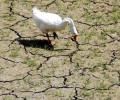
In the first of a two-part series, Business Standard examines the impact of the upcoming summer on agriculture and drinking water supply.

Over 1,800 dead in just over a week! The bristling summer continues to claim lives across India as temperatures soar between mid-to high-40 degrees. And there's no respite in sight for at least the next couple of days.

Indian cities will go down like a pack of cards if hit by a powerful earthquake, seismologists tell Rashme Sehgal.

Scientists at the India Meteorological Department warn that not only has India turned hotter in the last two decades, but that heat waves are projected to become more intense, have longer durations and greater frequency, thereby resulting in more deaths.

The earthquake epicentred in the Hindukush mountain range in Afghanistan struck at around 2.40 pm, sending ripples across several states like Jammu and Kashmir, Delhi- National Capital Region, Punjab, Uttarakhand and Rajasthan.

Mihir Bhat, fellow at the Harvard Humanitarian Initiative and Director of the All India Disaster Management Institute tells rediff.com's Vicky Nanjappa that the youth of the country will swing into action to see what gets done on the ground.

Nepali labourers are not only the backbone of the state's apple economy but also part of the highly grounded manpower in the orchards, setting an example for other states struggling with the migrant labour question, reports Ashwani Sharma.

Top officers across various ministries participate in the meeting that started at 8 pm on Saturday. The meeting is currently underway. The country is currently witnessing a second and more severe wave of the pandemic.

Fresh tremors were on Sunday felt in various parts of India, including the national capital Delhi, even as the death toll in Saturday's earthquake climbed to 62.
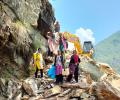
Whether the third wave will ravage us depends on the pace of vaccinations, careful and calibrated opening up of establishments, and a strategy to contain the spread in specific states or pockets.
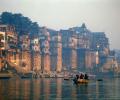
'There will always be hiccups given that the Namami Gange programme is spread over different sectors and involves several agencies.'
